Chung Cheng Academic Achievements Information System
應用於行動與空間群眾外包任務指派之非金錢激勵機制
Engineering and Technologies
OCT 01, 2026

A Non-Monetary Incentive Mechanism for Mobile and Spatial Crowdsourcing Task Assignment

Read More

一條緊密的連結:顧客為何會黏著於全通路零售商?
Humanities and Social sciences
SEP 29, 2026

A binding tie: why do customers stick to omnichannel retailers?

Read More

公司政治風險與債務選擇
Humanities and Social sciences
SEP 03, 2026

Firm-level political risk and debt choice

Read More
孕期維生素 D 對孕婦及後代健康的影響:系統性回顧與統合分析之傘式文獻回顧
Natural sciences
JUN 04, 2026

Effects of vitamin D in pregnancy on maternal and offspring health-related outcomes: An umbrella review of systematic review and meta-analyses

Read More

慢性腎臟病患者使用 GLP-1 受體促效劑之腎臟與心血管預後:隨機試驗系統性回顧與統合分析
Humanities and Social sciences
APR 28, 2026

Kidney and Cardiovascular Outcomes Among Patients With CKD Receiving GLP-1 Receptor Agonists: A Systematic Review and Meta-analysis of Randomized Trials

Read More

粒線體穀胱甘肽在細胞氧化還原穩態和疾病表現中的作用
Engineering and Technologies
MAR 16, 2026

Mitochondrial Glutathione in Cellular Redox Homeostasis and Disease Manifestation

Read More

微生物誘導碳酸鹽沉澱技術(MICP):環境污染治理的新契機
Natural sciences
MAR 16, 2026

Microbially Induced Carbonate Precipitation (MICP): A Promising Approach for Environmental Remediation

Read More
2025年「臺綜大年輕學者創新研發成果選拔」人文社會科學組優等獎得主—洪靖助理教授
Humanities and Social sciences
FEB 05, 2026

2025 TCUS Young Scholar Excellence Award in Humanities and Social Science Division—Assistant Professor Ching Hung

Read More

淨零排放之氫能與儲能技術開發
Engineering and Technologies
NOV 19, 2025

Development of Hydrogen Energy and Energy Storage Technologies for Net-Zero Emissions

Read More

以社會建構主義取向設計的EFL大學生寫作課:寫作動機與自我調整學習研究
Humanities and Social sciences
OCT 21, 2025

Fostering EFL University Students’ Motivation and Self-Regulated Learning in Writing: A Socio-Constructivist Approach

Read More

Focus Scholars

Humanities and social sciences

More Articles
A binding tie: why do customers stick to omnichannel retailers?

A binding tie: why do customers stick to omnichannel retailers?

Sep 29, 2026

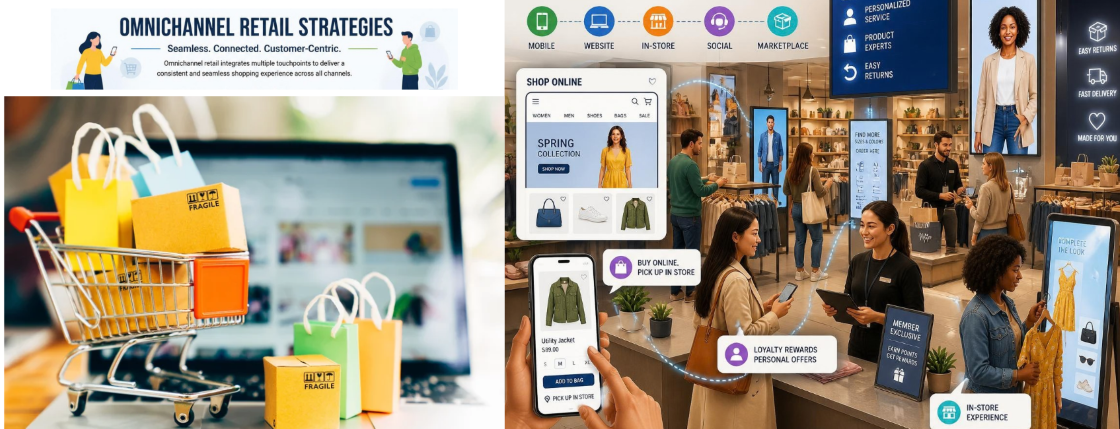
From Multiple Channels to Omnichannel Integration: Why Do Customers Stick with Omnichannel Retailers? As e-commerce, mobile shopping, and physical retail continue to converge, consumers increasingly move across different channels, including physical stores, websites, and mobile applications. For retailers, integrating these channels to provide customers with a consistent and seamless shopping experience has therefore become an important issue in omnichannel retailing. In the study A binding tie: why do customers stick to omnichannel retailers?, examines how channel integration quality affects customer stickiness in omnichannel retailing and explores the mechanisms underlying this relationship. Drawing on Commitment-Trust Theory, the study connects the integration of retail channels with the development of customer relationships. Do More Channels Make Customers Stay? A central question of the study is whether providing customers with more shopping channels necessarily leads to stronger and more lasting relationships with retailers. To address this question, the study conceptualizes channel integration quality through five dimensions: channel choice breadth, channel service transparency, content consistency, process consistency, and perceived fluency. These dimensions capture different aspects of how retail channels are integrated and how such integration may shape customer stickiness. The study surveyed 868 female consumers with omnichannel shopping experience and employed partial least squares structural equation modeling (PLS-SEM) to examine the proposed relationships. The findings indicate that customer stickiness is not simply a consequence of having more channels available. Rather, it is closely related to whether different channels can provide a consistent and seamless service experience. From Channel Integration to Customer Relationships The study further shows that trust and relationship commitment play important roles in linking channel integration quality with customer stickiness. When customers can move across channels while receiving consistent product information, prices, promotions, and services, and can complete their shopping and post-purchase activities smoothly, they may develop greater trust in the retailer and stronger relationship commitment. This suggests that the value of channel integration extends beyond transactional convenience and can also contribute to the development of customer–retailer relationships. Perceived fluency has particular theoretical significance in the study. Rather than treating fluency simply as an outcome of successful channel integration, the study conceptualizes it as an important component of channel integration quality. Effective omnichannel integration therefore involves more than connecting different channels technically; it also requires customers to experience their interactions across channels as continuous, natural, and easy to navigate. The research model explains a meaningful proportion of variance in customer stickiness, with an R² of 0.53, highlighting the roles of channel integration quality, trust, and relationship commitment in understanding how customer stickiness develops. The Key to Omnichannel Retailing: Making Different Channels Work as One A key practical implication of the study is that omnichannel strategy is not simply about offering more channels, but about enabling different channels to work together as an integrated experience. For example, customers may search for products on a mobile device, compare information on a website, and then visit a physical store to experience or purchase the product. In such customer journeys, consistency in product information, prices, promotions, and service processes across channels can help reduce the inconvenience associated with switching between channels. The objective of omnichannel retailing, therefore, extends beyond increasing the number of customer touchpoints. It involves integrating different channels into a more continuous customer experience. When channels work together effectively, the variety of options enabled by digital technologies can be translated into a more coherent and sustainable customer relationship. The study was published in the international information systems journal Information Technology & People and has received 56 citations, with a Field-Weighted Citation Impact (FWCI) of 4.29. FWCI provides a reference for understanding the citation impact of research relative to comparable research in the field. The citation record and FWCI of the study also reflect continued research interest in omnichannel retailing, channel integration, and customer relationships. From Multiple Channels to an Integrated Experience As retail evolves from e-commerce and multichannel operations toward omnichannel integration, interactions between consumers and retailers are increasingly shaped by experiences that extend across multiple channels. By examining channel integration quality together with trust and relationship commitment, this study suggests that customer stickiness is not simply a result of having more channels available. Instead, it is associated with the overall experience customers receive when moving across channels and the trust and relationships that develop from that experience. The study highlights an important consideration for retailers developing omnichannel strategies: beyond asking which additional channels can be offered, it is also important to consider whether different channels can function together as a coherent service experience. This perspective provides a basis for understanding the continuing evolution of omnichannel retailing from simply having multiple channels toward deeper integration across the customer journey.

Engineering and technologies

More Articles
A Non-Monetary Incentive Mechanism for Mobile and Spatial Crowdsourcing Task Assignment

A Non-Monetary Incentive Mechanism for Mobile and Spatial Crowdsourcing Task Assignment

Oct 01, 2026

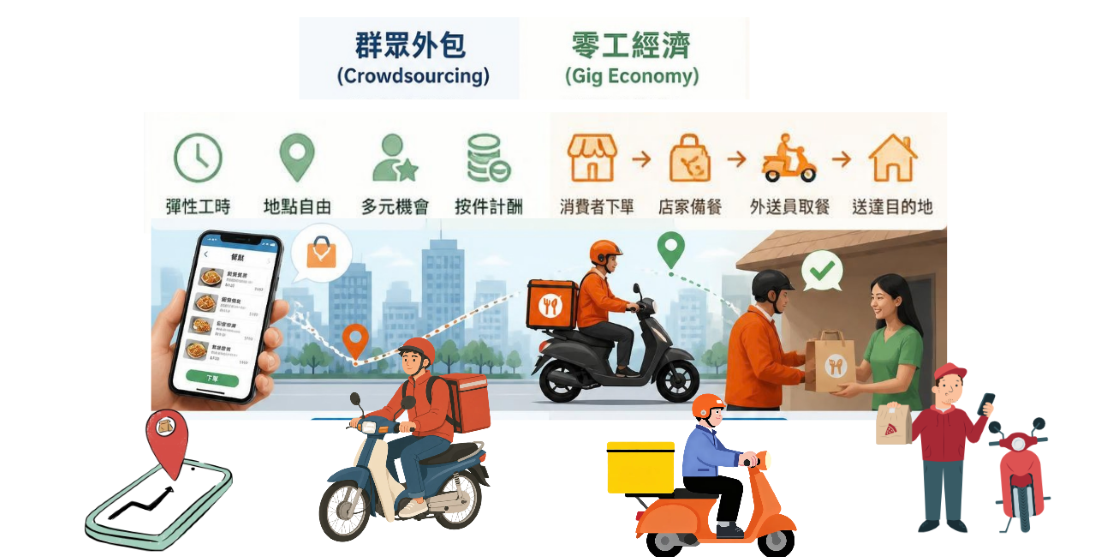
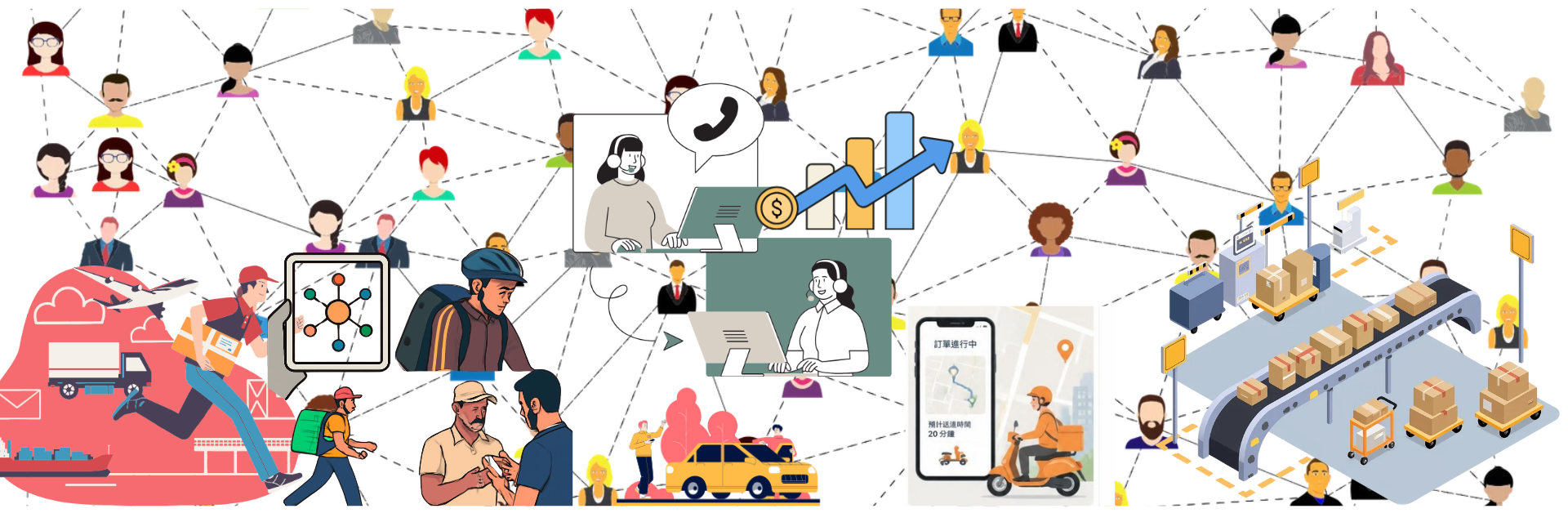
Background Crowdsourcing harnesses the collective effort of many participants and underpins today's gig economy, from ride-hailing (Uber) to food delivery (Uber Eats, foodpanda). In mobile and spatial crowdsourcing, a platform must assign location- and time-constrained tasks to suitable workers in real time (Fig. 1). This problem is NP-hard and faces three challenges: heterogeneous worker quality, long travel distances that reduce efficiency, and a lack of effective incentives that discourages participation. Most existing studies consider either spatio-temporal factors or worker reliability, but not both, and their incentives are almost entirely monetary. Method We propose STA-NIM, a suitability-based task assignment framework with a non-monetary incentive mechanism. Its system model, shown in Fig. 2, has four components: (1) Reliability evaluation: a fuzzy inference system with 27 rules infers each worker's reliability from task completion rate, task pass rate, and rating score. (2) Suitability calculation: suitability jointly considers worker reliability and task-worker distance, combining a fuzzy inference system with the entropy weight method. The framework switches between the two based on the weight ratio of the indicators: fuzzy inference keeps results stable when the weights are similar, while the entropy weight method separates candidates objectively when they differ. When a task is published, available workers are filtered by task radius and workload limit, and the task goes to the worker with the highest suitability, in O(|W|) time. (3) Monetary incentive: payment is based on reliability, travel distance, and completion time, with factor weights set by linear programming so that payment never exceeds the task budget. (4) Non-monetary incentive: in each cycle, a worker's rating and completion efficiency are quantified as a "power" value. Workers who perform well receive extra task quota, and therefore more earnings, in the next cycle. A Gini-coefficient constraint keeps tasks from concentrating on a few workers. Results Using a semi-synthetic dataset built from Foursquare, Yelp, and Kaggle data, we compared STA-NIM with STA (no non-monetary incentive), TASC-MADM, and BOPR: (1) From 2,500 to 10,000 tasks, STA-NIM's assignment rate stays above 76%, with the smallest decline (2.16%-7.97%; Fig. 3). (2) STA-NIM keeps a high assignment rate with fewer workers, doing more with less. (3) As the basic workload rises, STA-NIM's Gini coefficient falls, spreading tasks more evenly; the other methods become less even. (4) STA-NIM yields the highest average worker payment, rising 7.14%-42.9% with the budget. (5) STA-NIM achieves the highest average reliability at a moderate travel distance, with a maximum execution time under 375 ms, fast enough for real-time use. Contributions and Future Work STA-NIM balances task quality, efficiency, and fairness, and rewards high-performing workers with more opportunities and income. It can be applied to food delivery, ride-hailing, crowdsensing, and smart-city data collection. Future work will add task reassignment for worker drop-outs, handle the cold-start problem for new workers, and use game-theoretic analysis to address strategic behavior.   Providede by the Data Management Lab, Department of Computer Science and Information Engineering / Advanced Institute of Manufacturing with High-tech Innovations (AIM-HI), National Chung Cheng University  
Natural sciences

More Articles
Effects of vitamin D in pregnancy on maternal and offspring health-related outcomes: An umbrella review of systematic review and meta-analyses

Effects of vitamin D in pregnancy on maternal and offspring health-related outcomes: An umbrella review of systematic review and meta-analyses

Jun 04, 2026

1. Background: The Importance of Vitamin D During Pregnancy Vitamin D is an essential fat-soluble vitamin that plays a critical role not only in calcium and phosphorus metabolism and bone development, but also in immune regulation, metabolic function, and fetal growth and development. Due to increased physiological demands during pregnancy, combined with insufficient sunlight exposure and inadequate dietary intake, vitamin D deficiency has become a common global health concern among pregnant women. Whether vitamin D deficiency adversely affects maternal and neonatal health, and whether vitamin D supplementation can improve these outcomes, remains an important issue in clinical medicine and public health. 2. Research Method: An Umbrella Review of Existing Evidence This study employed an umbrella review approach to comprehensively synthesize findings from published systematic reviews and meta-analyses examining the effects of maternal vitamin D status and vitamin D supplementation during pregnancy on maternal and offspring health outcomes. A systematic search was conducted in PubMed, Embase, and the Cochrane Library. Sixteen eligible systematic reviews and meta-analyses published up to October 2023 were included, representing data from more than 250,000 pregnant women. 3. Association Between Vitamin D Deficiency and Adverse Maternal and Neonatal Health Outcomes The findings indicate that vitamin D deficiency during pregnancy is significantly associated with several adverse maternal and neonatal health outcomes. Pregnant women with vitamin D deficiency are at increased risk of preterm birth, gestational diabetes mellitus, recurrent miscarriage, and bacterial vaginosis. Their infants are more likely to experience low birth weight, small-for-gestational-age (SGA) status, and other unfavorable birth outcomes. Furthermore, low maternal vitamin D levels may be associated with an increased risk of long-term neurodevelopmental disorders in offspring, including attention-deficit/hyperactivity disorder (ADHD) and autism spectrum disorder (ASD). 4. Benefits of Vitamin D Supplementation for Maternal and Neonatal Health The study found that appropriate vitamin D supplementation during pregnancy can increase maternal serum vitamin D concentrations and reduce the risk of pre-eclampsia, miscarriage, and vitamin D deficiency. For fetuses and newborns, vitamin D supplementation was associated with increased birth length, reduced fetal or neonatal mortality, and improved neonatal vitamin D status. 5. Additional Benefits for Women with Gestational Diabetes Mellitus The benefits of vitamin D supplementation appear to be particularly pronounced among women with gestational diabetes mellitus (GDM). Supplementation was associated with improved glycemic control and insulin sensitivity, as well as reduced risks of polyhydramnios, fetal distress, macrosomia, neonatal hyperbilirubinemia, and neonatal hospitalization. 6. Conclusions and Clinical Implications Overall, this study demonstrates that maternal vitamin D status is closely linked to both maternal and neonatal health. Maintaining adequate vitamin D levels during pregnancy may help reduce pregnancy-related complications and improve fetal growth, development, and long-term child health outcomes. The findings support routine monitoring of vitamin D levels, particularly among women at high risk of deficiency, and suggest that vitamin D supplementation during pregnancy should be considered. Current evidence indicates that supplementation with more than 400 IU/day of vitamin D may help prevent certain adverse maternal and neonatal outcomes. 7. Research Contributions and Future Perspectives The findings of this study provide valuable evidence for clinical practice, prenatal nutritional guidance, and public health policy development. By highlighting the importance of maintaining adequate vitamin D status during pregnancy, this research contributes to strategies aimed at improving the health and well-being of both mothers and their children.   (Provided by: Clinical Medical Research Center research team, Chia-Yi Christian Hospital)

Education and culture

More Articles
Designing Life for 100 Years: From Taiwan’s Active Aging Learning Initiatives to an Action Blueprint for a Longevity Society

Designing Life for 100 Years: From Taiwan’s Active Aging Learning Initiatives to an Action Blueprint for a Longevity Society

Feb 28, 2025

Background: The Turning Point of an Aging Society Has Arrived   Taiwan is entering a super-aged society at an unprecedented pace. According to data from the National Development Council, by 2025, people aged 65 and over will account for more than 20% of Taiwan's total population. In the future, Taiwan’s rate of population aging is projected to surpass Japan’s starting in 2047 and, by 2070, be only slightly behind South Korea’s—ranking among the highest globally. This is no longer a future scenario—it is already happening. Many individuals are unprepared mentally, and both social systems and personal planning are struggling to keep up. While past aging policies have focused largely on care and medical support, the emergence of a decades-long elderly stage of life calls for a new paradigm. Shouldn’t we reimagine this challenge through the lens of education? How can we help people proactively plan, engage, and live meaningfully in the second half of life? Fig. 1. 臺中市樂齡學習示範中心   A Global First: Taiwan’s “Senior Learning Policy” as a Model for Educational Prevention and Proactive Aging Since 2008, my team and I have implemented a “Active Aging Learning Initiative,” which became the world’s first government-led, systemically implemented educational policy for older adults1. Unlike the international norm that prioritizes the “right to be cared for,” we advocate for a different concept: the “responsibility to design one’s later life through learning before entering old age.” Senior learning is not just about course delivery—it is a pathway to social participation and self-actualization. Over 18 years, more than 372 senior learning centers have been established across Taiwan. A community-based, intergenerational, and action-oriented model has emerged, deepening education’s role in building a longevity society2. Fig. 2. from 劉文端   The “1-2-3 Instructional Model": A New Pedagogical Paradigm for Adult Learning To overcome the passivity of traditional learning, we developed the “1-2-3 Instructional Model” tailored for older and adult learners. It emphasizes three core components3: l 1 Learning Focus: Center on a clear learning objective. l 2 Learning Activities:Combine conceptual understanding with hands-on experiences to boost motivation and contextual awareness. l 3 Applications: Transform learning into practical actions—whether personal, social, or purposeful. This model is now part of Taiwan’s Professional Training and Certification in Active Aging Education, with over 8,000 certified instructors actively teaching in Active Aging Learning Centers and community programs, becoming catalysts of educational transformation in the age of longevity. Fig. 3. 高雄市樂齡學習示範中心   The Third Life University: A New Lifelong Learning Blueprint for the 55+ Generation In 2024, commissioned by the Ministry of Education, we developed the framework and pilot for the “Third Life University” targeting adults aged 55 and above. Key features include: l Core literacy curriculum modules for a 100-year life l Ministry-accredited credit and certification systems l A hybrid learning model linking university resources with communities. l Program designs to support career transitions, meaningful engagement, and dream realization The Third Life University is not just a place for learning—it is a platform for new social roles and personal value in a long-lived society. From Anxiety to Action: Life Design Modules for a 100-Year Life Our research shows that many individuals face two tensions in later life: anxiety over identity shifts and lack of clear goals, alongside uncertainty about what they truly want. To address this, we created a “Designing Life for 100 Years” learning module, incorporating self-directed learning, narrative inquiry, and action planning to support: l Life review and future exploration l Values clarification and goal setting l Micro-practices and reflective action This module now serves as the foundation for the “Life Design for 100” Facilitator Certification, aimed at training professionals equipped to guide and inspire others45.   Beyond Academia: Social Advocacy for Designing Life After 50 As a scholar, I’ve realized that research without real-world application cannot address society’s urgent needs. Since 2012, we have translated academic insights into public initiatives and publications, including:  l Practical books such as Design Your Second Half: A Happiness Guide for Active Aging and Designing a Life That Moves You l Certified Life Design Facilitator l Public education campaigns, social innovation projects, and experimental courses for longevity living Through interdisciplinary collaboration and community co-creation, we aim to inject hope and agency into the rapidly aging society6.   A Sincere Invitation to Like-Minded Changemakers If you resonate with any of the following: l You wish to explore cutting-edge theories and practices in elder education l You hope to become a “100-Year Life” facilitator and support others in their later-life transitions l You aim to design learning programs or action plans for the 55+ generation l You want to contribute to policies or fieldwork for a longevity society We warmly invite you to join the Learning & Action Movement of Designing Life for 100 Years7. Because now is the best time to redesign the future. Fig. 5. National Chung Cheng University Aging & Education Research Center   1 Findsen, B., Wei, H.-C., & Li, A.-T. (Eds.). (2022). Taiwan's Senior Learning Movement: Perspectives from the outside in and from the inside out (Lifelong Learning Series 28). Springer. DOI: https://doi.org/10.1007/978-3-030-93567-2 2 Findsen, B., & Wei, H.-C. (2023). Senior Learning in Taiwan: Achievements and Challenges. Adult Education Discourses, 24, 103-119. DOI: https://doi.org/10.34768/dma.vi24.685 3 Wei, H.-C., & Li, A.-T. (in press). Taiwan's active aging learning practice through the 1-2-3 Instructional Model: Facilitating learning among individuals 55 years old and above. In Qiu Wang & Guofang Wan (edit.). Life-long Learning: The Education of the Aging Population (pp. xx–xx). Chinese American Educational Research and Development Association Book Series, Information Age Publishing. https://tinyurl.com/4p7427rr 4 Liao, F.-M., Chen, G.-L., Hsu, C.-T., Liu, Y.-H., Cheng, L.-L., Chan, X.-C., & Wei, H.-C.* (2023). Validation of the self-directed learning scale for middle-aged and older adults. Educational Gerontology 50(4), 304-319. DOI: https://doi.org/10.1080/03601277.2023.2270874 5 Liao, F.-M., Chen, G.-L., Hsu, C.-T., & Wei, H.-C.* (2024). Assessing the ability of self-directed learning as a prerequisite for active aging among middle-aged and older adult learners: cross-sectional study. Educational Gerontology, 51(3), 313-329. DOI: https://doi.org/10.1080/03601277.2024.2391164 6 Wei, H.-C., Lin, Y.-H., & Chang, L.-H. (2023). The Effectiveness of a Blended Learning‐Based Life Design Course: Implications of Instruction and Application of Technology. SN Computer Science, 4, Article 360. https://doi.org/10.1007/s42979-023-01730-3 7 Wei, H.-C. (2022, July). My Personal and Professional Growth in the Second Half of Life: The Impact of My Active Aging Learning Experiences. PIMA Bulletin, 43, 25-28. Special Issue on Later Life Learning, guest editors Brian Findsen and Diana Amundsen. https://vn.seameocelll.org/wpcontent/uploads/2023/12/PIMA-Bulletin-No.43-Jul-2022.pdf